The Fair Isaac Corp (FICO) announced last month that there would be some changes to the formula that calculates the FICO score. Two new scores are being offered, the FICO 10 and 10 T. The three main credit reporting agencies, Experian, TransUnion and Equifax, can start providing lenders with these new scores by the end of 2020.
Every few years the company creates an updated version of the score. The main five factors will still be used in the model, payment history, amounts owed, credit history age, credit mix and new credit accounts. So what’s new? According to the Vice President of Product Management at FICO, as noted in the New York Times Article “Your Credit Score May Soon Change. Here’s Why” By Tara Siegel Bernard,
"The new scores reflect nuanced changes in consumer credit trends that we observed from our analysis of millions of credit files."
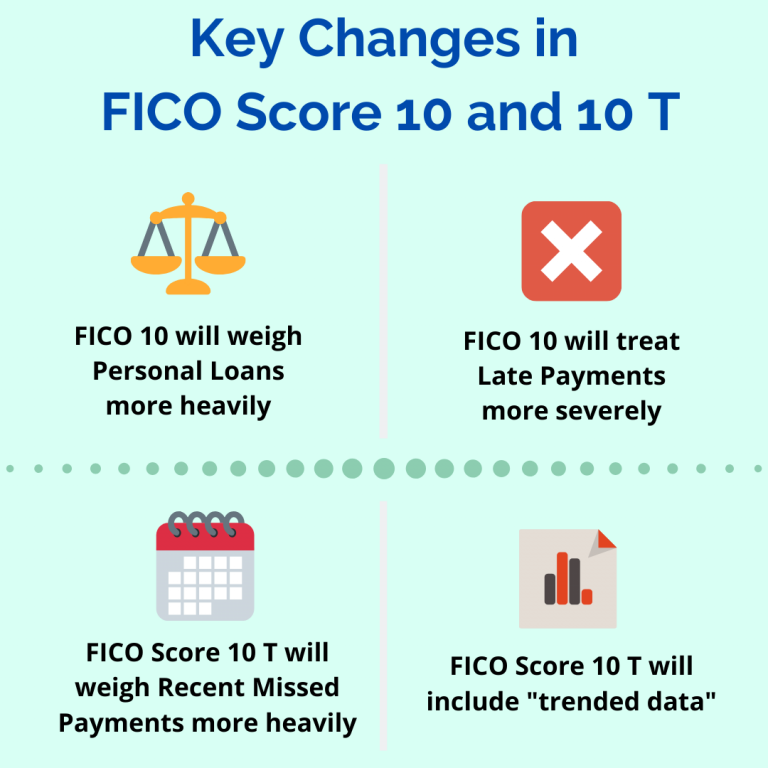
Personal loans are a great way to consolidate multiple debts held at a higher interest rate, such as on credit cards, into one loan at a lower rate. The new model could penalize you for having a personal loan. One instance that could cause you to get penalized would be taking out a personal loan to consolidate debt on multiple credit cards. Those credit cards would be paid off and have a zero balance. Then let’s say you start using those same credit cards to rack up new debt. You would now have the personal loan to pay and newly acquired credit card debt to pay. This would be weighed negatively under the new FICO 10.
Late Payments are reported by lenders, in most part, when you’ve gone at least 30 days past due. These are considered delinquencies on your credit report. This has not changed since the last update to the FICO score. What has changed is the weight associated with late payments. With the new FICO 10, late payments are weighed more severely and will cause a more significant drop in your score.
For FICO 10 T specifically, recent missed payments will be weighed more heavily. Those who have a higher percentage of debt to credit that lasts an extended period of time will also be greater penalized.
While trended data isn’t a new concept, it being factored into the equation of determining your FICO score is. The new FICO 10 T would look farther back into your credit history to see your balances and payment trends. FICO 10 T would take into account the past 2 years, and in some cases more, of credit history. The score will better reflect your credit habits and behaviors by looking at a longer time frame. Trended data gives the scoring model a way to determine where your balances are over a time period; are the balances reducing, maintaining or increasing.
Previously, before you went to apply for a loan you would take 2-3 months to pay down your debts. This would help to lower your debt and raise your score before you submitted your application. Now, a better approach would be to start as soon as possible to pay down your balances and show a consistent trend of payments and balance decreases.
Credit cards will include trended data of balances, minimum payments and their requirements and amounts paid for the last 24 months. The new format will also show the difference between a person who pays in full each month (transactor) and a person who pays a portion each month with a balance that carries over (revolver).
These key changes in the model will provide lenders and consumers with a better understanding of a person’s credit history and credit behaviors. FICO Score is one of the most important factors when applying for a home loan (mortgage). Contact your financial professional today for advice on how to start improving your credit.
1. The New York Times – “Your Credit Score May Soon Change, Here’s Why”, By Tara Siegel Bernard
https://www.nytimes.com/2020/01/25/business/credit-score-fico-change.html
2. Experian – “What You Need to Know About the New FICO 10 Scores”, By John Ulzheimer
3. MarketWatch – “FICO just updated its credit scores – here’s how to improve yours”, By Jacob Passy