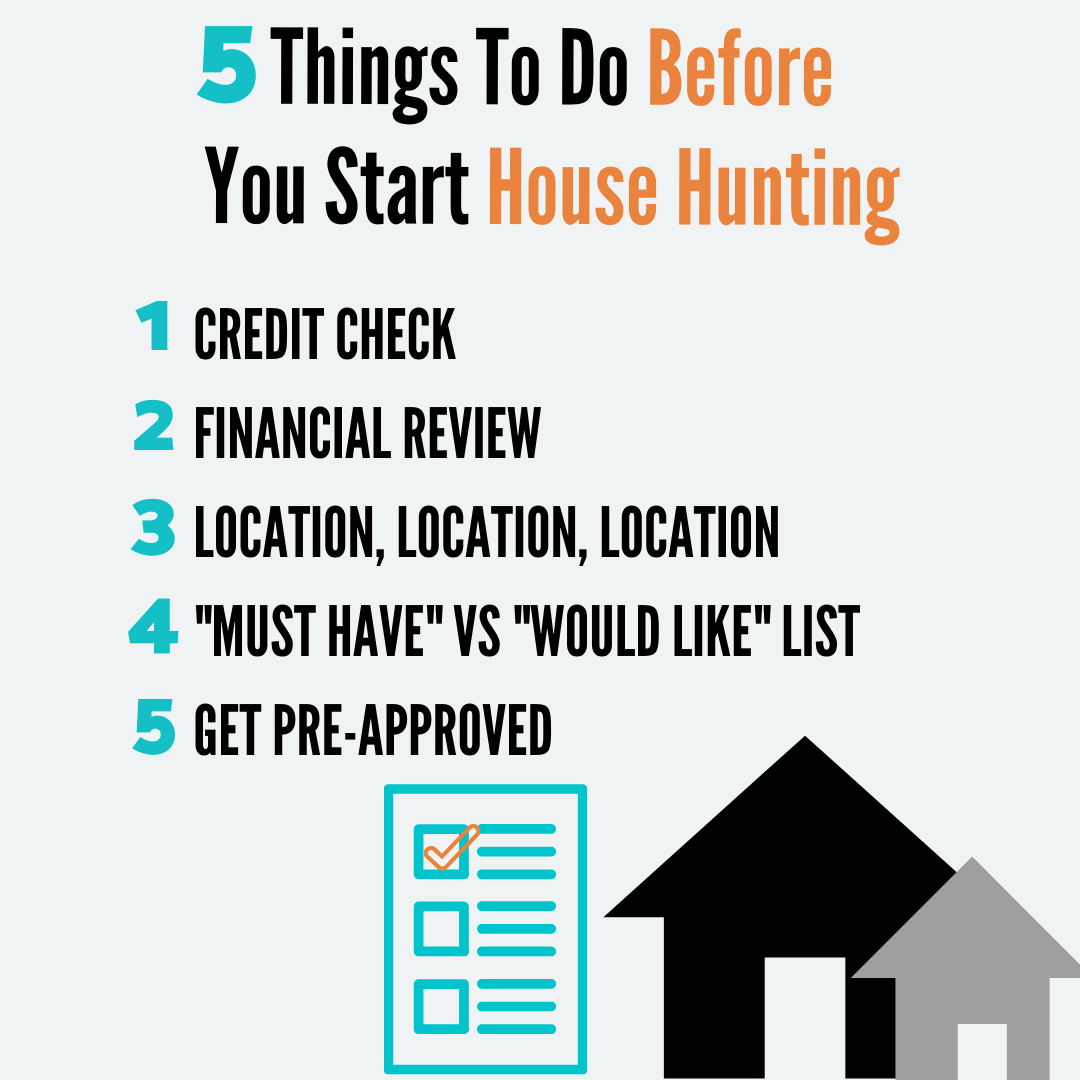
Are you thinking of buying a house? Maybe you’ve been entertaining the idea for a while or maybe you’re just getting started. Before you even begin to go out and look at potential houses there are 5 things you should do. These steps will help make the house hunting and buying process much smoother.
CREDIT CHECK
Your credit score is one of the most important factors in determining if you will qualify for a loan and what your interest rate will be. You can check your credit score and get a credit report for free from various online sites. Ideally you want to do your own credit check a few months (6 months if possible) before you begin house hunting. This gives you enough time to dispute any issues and work on improving your credit score if it’s low. Don’t worry if your credit score is lower than required for a loan, there are ways to raise your score. What’s important is to find out where you stand and if anything needs to be done to improve your credit. Don’t forget to check everyone’s credit who will be applying for the loan.
Conventional loans and VA loans: Typically require a minimum credit score of 620 or higher. Check with your lender for current requirements.
USDA loans: Typically require a minimum credit score of 640 or higher. Check with your lender for current requirements.
FHA loans: Typically require a minimum credit score of 580 or higher. Check with your lender for current requirements.
Checking your own credit does NOT affect your credit score. This is known as a “soft” inquiry.
FINANCIAL REVIEW
Have you ever looked over exactly what you bring in and spend every month? Fair warning it can be a shock. It also can give you a better idea of what you’re projected monthly mortgage payment should be to keep you within your budget. Another warning, a lender will most likely approve you for more than you feel comfortable paying each month. This doesn’t mean you have to buy a more expensive house since you’ve been approved for a larger amount. By doing a financial review you will see exactly where all your money goes each month and what amount works for your budget. This review will help you, your lender and Realtor find a price range that keeps you on budget.
LOCATION, LOCATION, LOCATION
While the saying “location, location, location” usually means the value of a property based on its location, I use it in a different way when thinking about buying a home.
The Three Locations of Buying are:
Location – Town/City
There can be a big difference between one town/city from another, even if they are right next to each other. Property taxes are one of the biggest differences you’ll see. Before you begin looking at houses make a list of the towns, cities, etc. that you want to search in.
Location – Neighborhood
Finding the right neighborhood is more of a personal preference. Some key factors to consider are proximity of amenities, accessibility to job, overall look of neighborhood and safety. Depending on your lifestyle, family and preferences these features may rank higher or lower in importance.
Location – School District.
If you have children or plan on in the future you’ll want to think about what school they’ll be going to. A town may be divide into a couple of districts (or schools) and where you live dictates which school your children goes to. Even if you don’t have children, a better school district tends to have a better resale value. You can find out the school district zones by asking your Realtor, searching on the county website or searching on the various online real estate sites.
“MUST HAVE” VS “WOULD LIKE” LIST
When looking for a house there are many things to consider. Some are more obvious than others, like how many bedrooms or how many bathrooms do I need. Others may not be as obvious, like fenced in yard or gas cooking. This can be a fun exercise to make a list of “Must Have” and “Would Like”. A “Must Have” is something that the house has to have or you will not consider it. This may be the number of bedrooms or a garage. It’s what you’re looking for and something that you consider a necessity or the house is out. A “Would Like” is something that would be a bonus or nice feature. This may be granite counter tops or back deck. Either way this list is your personal opinions and preferences. What works for you may not work for someone else and that’s fine. The more you think about what you need and would like, the easier it will be for your Realtorto help find you the perfect home.
GET PRE-APPROVED
Once you’ve done all the previous steps it’s now time to get pre-approved by a lender. First, there is a difference between getting “pre-qualified” and “pre-approved”.
Pre-qualified is a simpler and quicker process that takes a look at some basic information that you provide to a lender. The lender will give you an estimate of how much you can borrow. This is not a guarantee; it’s only the first step.
Pre-approved is a more in depth process that involves in part a credit check. The lender will give you a conditional commitment for an exact amount and an idea of an interest rate. The pre-approval is good for 60-90 days, so it’s important to do this as close to when you start looking. A pre-approval letter is almost always required when making an offer in certain states, like South Carolina. Having a pre-approval letter makes your offer more appealing to a Seller by instilling confidence in that securing financing is unlikely to be an issue.
Pre-qualified and Pre-approved are two different things. Make sure you know the difference and speak with your lender.
Once you’ve completed these 5 steps, you’re now ready to work with you’re Realtor to find your dream home.